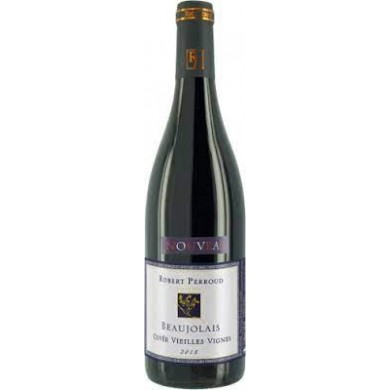
- Out-of-Stock

 close
close

The Beaujolais region constitutes one of France's most identifiable vineyards. Located south of Burgundy and north of the Rhône Valley, the Beaujolais is distinguished by a winegrowing identity strongly marked by the Gamay grape variety, varied granite terroirs and a specific winemaking tradition. Wines from Beaujolais today occupy an important place on the French and international markets thanks to their accessibility, stylistic diversity and ability to express their origin.
Over the last few decades, the Beaujolais region has undergone a notable qualitative evolution. Many estates have embarked on a transition to more environmentally-friendly practices, notably organic and biodynamic viticulture. This evolution has helped to strengthen the recognition of Beaujolais wines among connoisseurs and professionals seeking authentic cuvées from clearly identified terroirs.
The Beaujolais vineyards stretch some 55 kilometers between Mâcon and Lyon. It lies mainly in the Rhône department, with a small part in Saône-et-Loire. The Beaujolais winegrowing region covers around 17,000 hectares of vines spread across several levels of appellations.
The hierarchy of Beaujolais wines is based on three main categories:
The Beaujolais appellation
the Beaujolais-Villages appellation
the ten crus of Beaujolais
This organization makes it possible to distinguish different levels of terroir expression and wine complexity.
The southern part of Beaujolais is dominated by clay-limestone soils, giving rise to wines that are generally supple and accessible. Conversely, the northern part of Beaujolais is predominantly underlain by granitic soils, particularly favorable to Gamay and responsible for the structure and depth of the crus.
The main grape variety in Beaujolais is the black gamay with white juice. Introduced to the region several centuries ago, it has gradually established itself as the dominant grape variety due to its remarkable adaptation to granitic soils and the local climate.
Gamay produces wines characterized by:
an aromatic expression centered on red fruits
a generally supple tannic structure
a natural acidity providing freshness and balance
Depending on terroir and winemaking methods, Beaujolais wines can present very different profiles, ranging from fruity, immediate wines to structured cuvées capable of aging for several years.
The Beaujolais appellation constitutes the entry level of the regional hierarchy. Wines from this appellation are mostly produced in the southern part of the vineyard. They are characterized by an accessible, fruity style intended for relatively quick consumption.
The Beaujolais-Villages appellation groups together several communes located in the central and northern part of the vineyard. The wines generally display more structure and complexity than generic Beaujolais. Granitic soils are more present here, contributing to a more precise aromatic profile.
The crus represent the region's highest quality level. They correspond to ten communal appellations located in the northern part of the vineyard:
Brouilly
Côte de Brouilly
Régnié
Morgon
Chiroubles
Fleurie
Moulin-à-Vent
Chénas
Juliénas
Saint-Amour
Each cru of the Beaujolais has its own identity linked to its terroir and viticultural practices.
For example:
Morgon is known for its structured wines capable of aging.
Fleurie often produces more floral, elegant wines.
Moulin-à-Vent is renowned for its power and ageing potential.
Geological diversity is one of the fundamental elements of the Beaujolais identity. Soils vary greatly from one area to another, directly influencing the style of the wines.
The main types of soil encountered in the Beaujolais are:
pink granites
shales
granitic sands
clays
limestone
Granite soils dominate in the cru zone. They have a draining structure that limits vine vigor and favors natural grape concentration. These soils also contribute to the wines' tension and freshness.
The climate of Beaujolais is semi-continental with a moderate Mediterranean influence. Summers are generally warm and sunny, allowing good ripening of the Gamay grape. Winters are relatively cold, which favors vegetative rest for the vines.
The thermal amplitudes between day and night play an important role in preserving the acidity of the grapes. This acidity contributes to the balance and freshness characteristic of Beaujolais wines.
Winds, particularly the wind in the south of France, play a key role in the preservation of the grapes' acidity.
Winds, particularly those from the north, also help to keep the vineyards healthy by limiting humidity and disease pressure.
One of the historic particularities of Beaujolais lies in its vinification method. Semi-carbonic maceration is widely used in the region. This technique involves fermenting whole bunches in a tank saturated with carbon dioxide.
.
This process allows:
extract intense fruity aromas
produce supple tannins
to preserve the aromatic freshness of gamay
However, some producers also adopt more traditional vinifications with partial or total destemming in order to obtain more structured wines.
The Beaujolais is one of the French regions where the transition to organic viticulture has been particularly dynamic in recent years. Numerous estates have adopted environmentally-friendly practices, motivated by a desire to preserve their soils and produce more authentic wines.
Organic viticulture
is one of the most dynamic areas in France.
Organic viticulture in the Beaujolais region is based on several principles:
suppression of chemical herbicides
limitation of synthetic inputs
mechanical tillage
careful observation of the vineyard
These practices encourage the development of microbial life in the soil and allow the vines to root more deeply. The resulting grapes often present a better balance between ripeness and freshness.
The Beaujolais region also played a major role in the emergence of the natural wine movement in France. Several winemakers have contributed to this dynamic by adopting low-intervention winemaking methods, with very limited use of sulfites and natural fermentations.
This approach aims to produce wines that more directly express their terroir and vintage. It is often in logical continuity with organic or biodynamic viticulture.
The wines of Beaujolais present a great stylistic diversity depending on their origin and method of production.
The lighter wines are distinguished by:
fresh red fruit aromas
a supple structure
great drinkability
Wines made from crus can offer:
more aromatic depth
a more pronounced tannic structure
an aging potential of several years
Some crus like Moulin-à-Vent or Morgon can evolve favorably for more than ten years in bottle.
The wines of Beaujolais stand out for their gastronomic versatility. Their freshness and moderate structure make them particularly well-suited to a wide variety of dishes.
Among the most frequent pairings:
artisanal charcuterie
roasted poultry
white meats
traditional Lyonnaise cuisine
vegetarian dishes with grilled vegetables
The more structured crus can also accompany richer dishes such as red meats or simmered dishes.
There are 46 products.
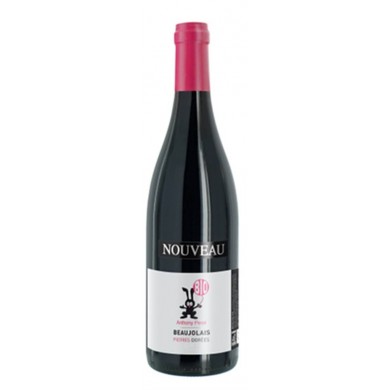
Le Beaujolais Nouveau 2024 du domaine Pérol est un joli beaujolais nouveau. Travaillé comme un vin de garde, ce Beaujolais Nouveau bio possède un fruit intense et une belle longueur. Le temps ne lui fait pas peur, vous pourrez le déguster sur 12 mois tant la concentration est là. Voici quelques notes de l'an dernier pour vous donner le niveau des vins de ce domaine...
LIVRAISON A PARTIR DU 21 NOVEMBRE 2022
RVF : 17/20Bourgogne Aujourd'hui : 17.50/20
Close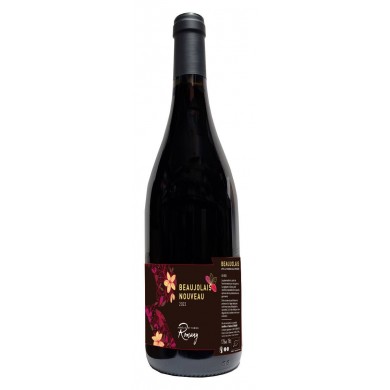
Concentrated, expressive, and of excellent quality, the 2026 vintage confirms the vineyard’s resilience in the face of extreme weather conditions.
Shipping begins November 19
Close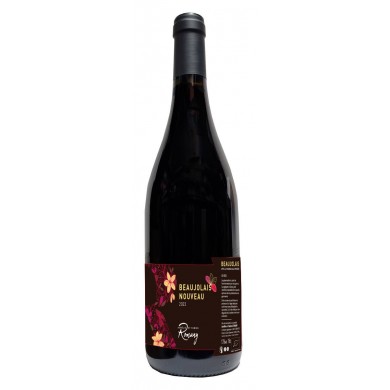
A beaujolais nouveau bio from the domaine Romany full of fruit and gourmandise. A 2024 with floral and red berry notes. A fresh, elegant organic wine!
Close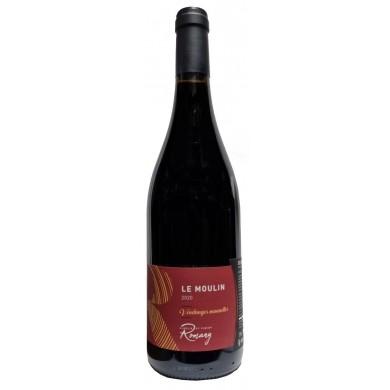
A superb Beaujolais from the domain Romany all fruit and suppleness. A juicy, mouth-watering Gamay, you can bite into the grape cluster!
Close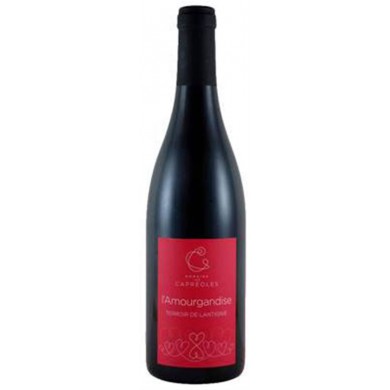
The cuvée Amourgandise du domaine les Capréoles is a superb Beaujolais, full of fruit, developing on notes of strawberry and raspberry. Crunchy to the max!
Close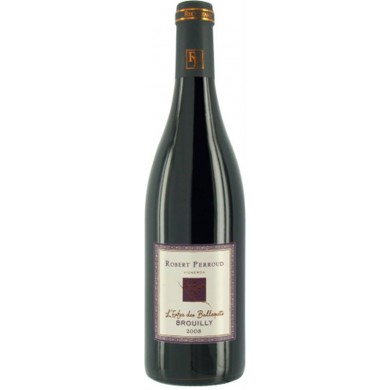
L'enfer des Balloquets du domaine Robert Perroud bears this name because every year, the grape-pickers go through an ordeal picking the grapes from this hillside whose slope is sometimes over 40%! This Brouilly is supple, fresh and digestible in this 2024 vintage!
Close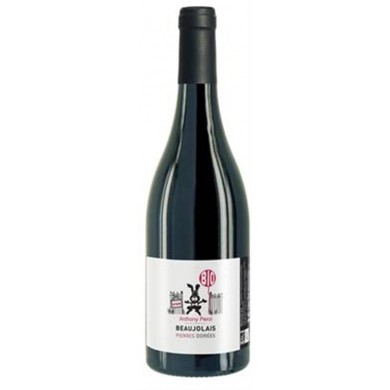
Le Clos du domaine Pérol has a purple color with violet highlights . The nose subtly combines blueberry, licorice and iris. The crisp, fruity palate is generous. Plenty of freshness and a long finish. Excellent value for money.
Close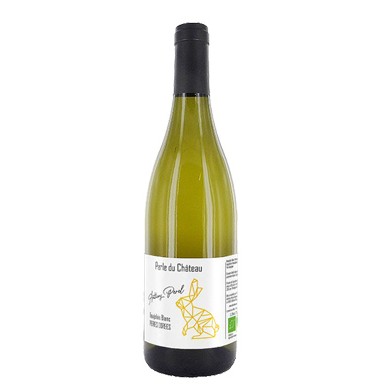
The Perle du Château cuvée from Domaine Pérol is a fresh, airy white Beaujolais.
Close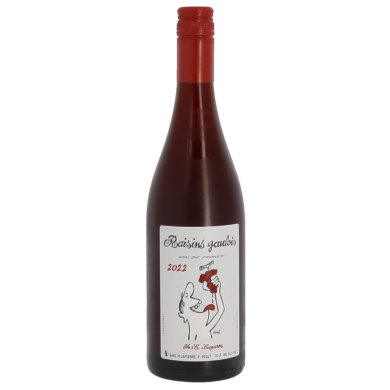
A juicy, gourmet Gamay produced by Domaine Marcel Lapierre. We crunch the grape!
Close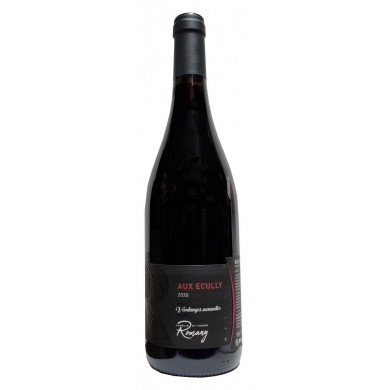
Aux Ecully du Domaine Romany is a magnificent cuvée: a fruity, intense Gamay with lovely freshness in this 2021 vintage. A wonderful discovery!
Close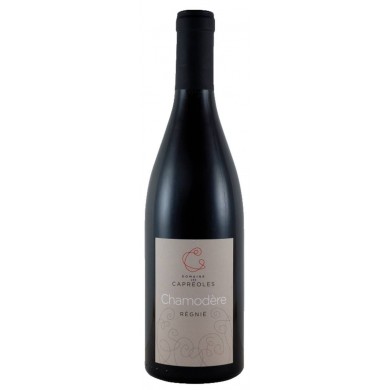
Chamodère du Domaine les Capréoles is a magnificent Régnié! While retaining the characteristics of traditional Beaujolais carbonic maceration combined with a proportion of destemmed grapes, this fruity Régnié leaves its mark on taste buds and spirits with its silky tannins and impressive volume on the palate.A pleasurable, gourmet wine to simply savor.
Close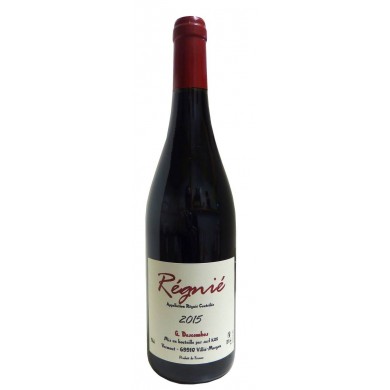
This Régnié from Domaine Georges Descombes has a rich and expressive nose with fruity and peppery notes. On the palate, it is full-bodied, velvety, and long-finishing. A superb natural wine! Guide to the Best Wines of France 2017: 16.50/20
Close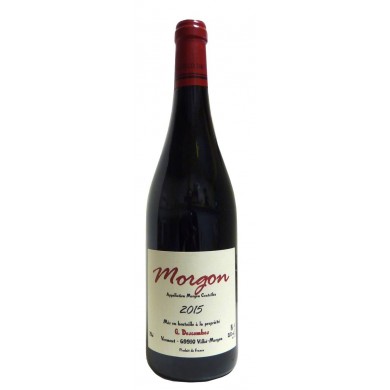
This 2018 Morgon from Domaine Georges Descombes has a lovely, dense body. This natural wine deserves a few months of aging to reach its full potential. We love its full-bodied palate and fruity aromas. Guide to the Best Wines of France 2017: 17/20
Close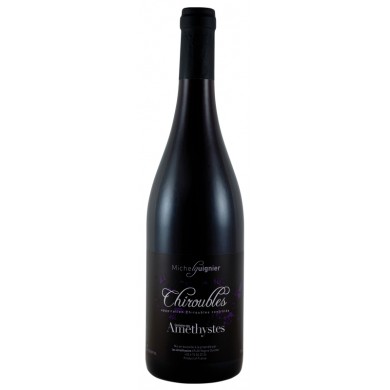
A Chiroubles from Domaine Michel Guignier, all fruit and suppleness. This cuvée is crisp and the wine is juicy and silky. A great success for the appellation.
Close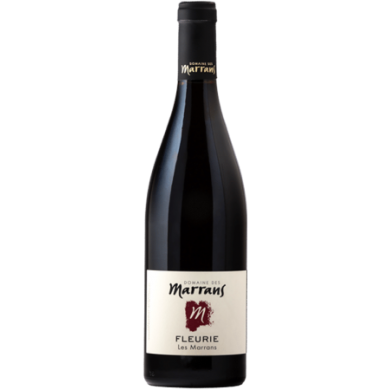
Magnificent Fleurie 2023 from Domaine des Marrans. A fruity, gourmet organic wine, supple and charming in this lovely vintage.
Close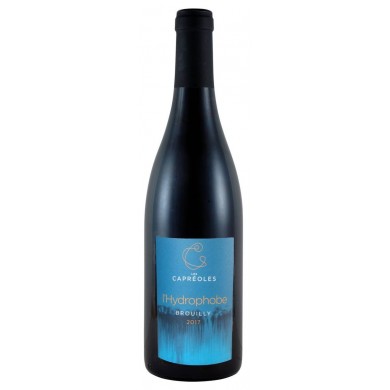
L'hydrophobe du domaine les Capréoles is a Brouilly born in 2017 following the hailstorms that wiped out the harvest. These organic Brouilly reasons produce a gourmet, fruity, light wine, typical of this beautiful AOC.
Close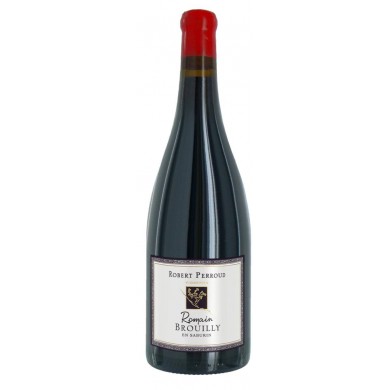
This cuvée Romain du Domaine Robert Perroud is from a parcel of pink granite facing the rising sun. The nose develops notes of raspberry, spice and peony. Round on the palate, with fine, mellow tannins. Excellent length and a real "coup de cur" for this Beaujolais cru! RVF : 16/20
Close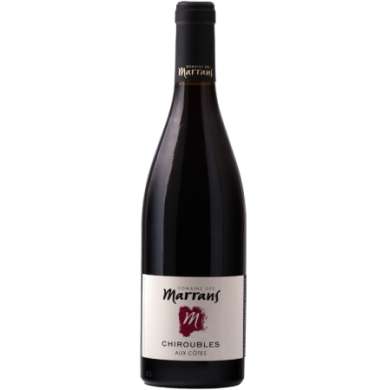
Aux Côtes du domaine des Marrans is a very successful Chiroubles: a fruity, intense wine with a lovely gourmand touch. A Gamay with a lovely sparkle.
Close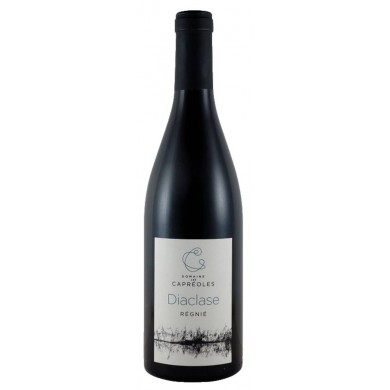
What a success this Diaclase du Domaine des Capréoles cuvée is! Produced from the oldest plots and aged in oak barrels, this cuvée offers great aromatic complexity carried by a firm, yet very silky structure. Full-bodied and long on the palate, with a lovely freshness. This is a great Régnié that can be enjoyed immediately on the fruit, but which will reveal many other facets over the course of its 15 years of ageing.
Close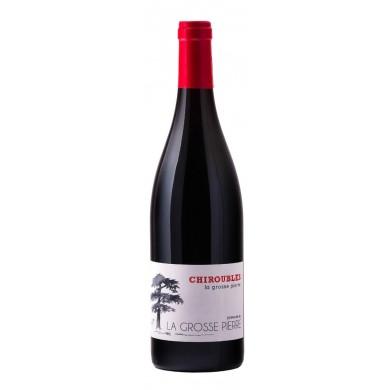
Le Chiroubles du domaine de la Grosse Pierre est un vin naturel fruité, gourmand, léger, qui se décline sur des notes de petits fruits rouges. Une jolie gourmandise !
Close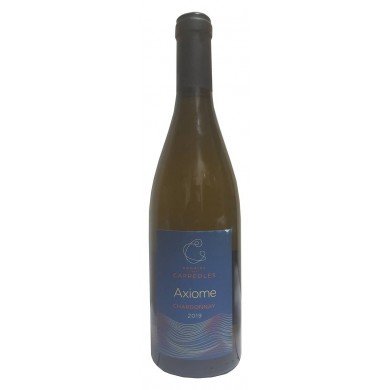
Axiome du domaine Les Capréoles is a white Beaujolais made from Chardonnay grapes. After a long, gentle pressing, the wine was vinified in barrel with indigenous yeasts and aged on lees for 8 months. This white Beaujolais Lantignié combines concentration, roundness and finesse. A lovely gastronomic wine that's easy to match.
Close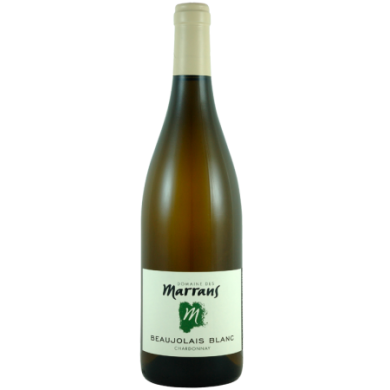
Beaujolais Blanc 2023 du Domaine des Marrans is a great success: this charming organic wine develops on notes of peach and white flowers. It is superb on the palate, full-bodied and fruity. An expressive, perfectly balanced white.
Close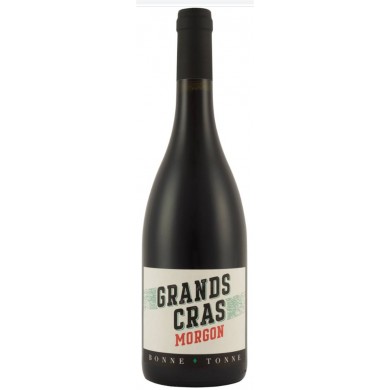
The Grands Cras du domaine de la Bonne Tonne cuvée comes from granite terroir. Mineral and spicy, this is a Morgon with a superb personality!
Close